
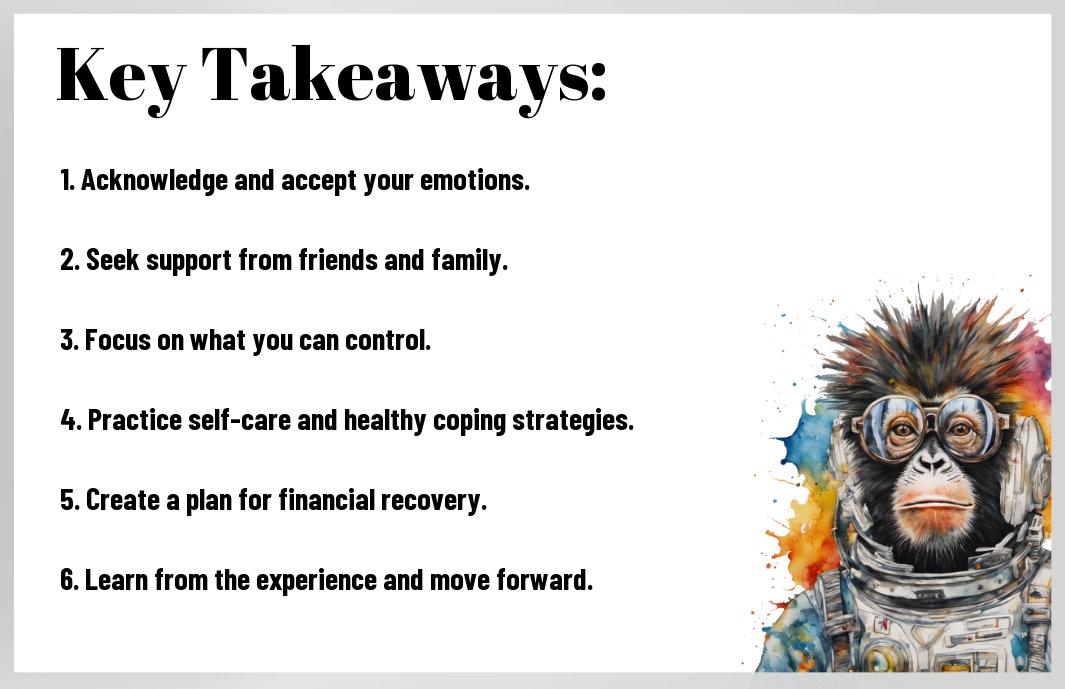
Key Takeaways:
- Recognize the impact: Understand and acknowledge the emotional and mental toll that financial failure can have on your well-being.
- Seek support: It's crucial to seek support from friends, family, or professional counselors to help navigate the challenges of financial failure.
- Focus on self-care: Prioritize self-care activities such as exercise, meditation, and hobbies to relieve stress and maintain a positive outlook.
- Develop a plan: Create a realistic financial plan to address and manage the challenges of your situation, and seek help from a financial advisor if necessary.
- Adopt a positive mindset: Practice gratitude and positive thinking to shift your perspective and reduce the impact of financial stress on your mental health.
- Set realistic goals: Establish achievable financial goals and take incremental steps towards improvement to regain a sense of control and progress.
- Learn from the experience: Reflect on the lessons learned from financial failure and use them as an opportunity for personal growth and resilience.
The Emotional Journey of Financial Distress
Even the thought of financial failure can be overwhelming. The emotional toll of financial distress cannot be overstated. It's not just about the numbers in your bank account, it's about how you feel about yourself, your future, and your ability to provide for yourself and your loved ones. It's a rollercoaster of emotions, and it's important to recognize and address them as part of your journey to wellness.
Stages of Emotional Response
When facing financial distress, you may experience a range of emotions. In the beginning, you might feel shock and disbelief, as if it's all just a bad dream. Then, as reality sets in, you may feel anger, frustration, and even guilt. It's important to acknowledge and process these emotions before you can move forward. Eventually, you may start to feel a renewed sense of determination and hope as you consider your options and make a plan to overcome your financial challenges. Understanding and accepting these stages can help you navigate through them with confidence and resilience.
Building Resilience
Building resilience in the face of financial failure is crucial for your mental and emotional well-being. It involves recognizing your strengths and finding healthy ways to cope with stress. This may include seeking support from friends, family, or a professional counselor, as well as engaging in activities that bring you joy and relaxation. By focusing on self-care, adjusting your mindset, and taking proactive steps to improve your financial situation, you can regain a sense of control and optimism in the face of adversity.

Practical Strategies for Financial Recovery
Not all hope is lost after experiencing financial failure. There are practical strategies you can implement to recover from this setback and put yourself on the path to financial wellness. By taking proactive steps and making changes to your money management habits, you can gradually rebuild your financial stability and security.
Creating a Financial Comeback Plan
After facing financial failure, it's crucial to create a well-defined plan to regain control of your finances. This involves setting specific, achievable goals and devising a realistic timeline for achieving them. Assess your current financial situation, including your income, expenses, debts, and assets. From there, develop a budget that aligns with your financial goals and allows you to live within your means. It's important to stay disciplined and make necessary sacrifices to stay on track. This may involve cutting back on non-essential expenses and finding ways to increase your income. By creating a comeback plan and sticking to it, you can begin to rebuild your financial foundation.
Essential Money Management Skills
When recovering from financial failure, it's essential to develop strong money management skills. This includes improving your financial literacy, learning how to budget effectively, and understanding the importance of saving and investing. You should also make a habit of reviewing your financial statements regularly, tracking your spending, and identifying areas where you can cut costs. Developing a keen understanding of managing debt and using credit responsibly is also crucial. By honing these essential money management skills, you can take control of your finances and work towards achieving long-term financial stability.
Psychological Tools for Stress Management
For many people, financial failure can lead to significant stress and anxiety. This can take a toll on your mental and emotional well-being, impacting your overall quality of life. It's important to recognize the connection between your mental and financial health and take steps to address it. Research has shown that there is a strong link between mental and financial health, and understanding this connection can help you better cope with the stress of financial failure. You can learn more about this connection here.
Mindfulness and Stress Reduction Techniques
One effective way to manage the stress of financial failure is to practice mindfulness and stress reduction techniques. Mindfulness involves being fully present in the moment and paying attention to your thoughts and feelings without judgment. By incorporating mindfulness into your daily routine, you can learn to better cope with the stress of financial failure. You can start by practicing deep breathing exercises, meditation, or yoga to help calm your mind and reduce stress levels. These techniques can help you develop a sense of calm and stability in the face of financial challenges, allowing you to approach them with a clearer and more focused mind.
Harnessing the Power of Positive Psychology
Positive psychology focuses on building strengths and cultivating positive emotions to improve overall well-being. When faced with financial failure, it's easy to become overwhelmed by negative thoughts and emotions. However, by harnessing the power of positive psychology, you can learn to shift your mindset and approach challenges with a more optimistic outlook. This might involve practicing gratitude, setting achievable goals, and finding meaning in your experiences. By focusing on the positive aspects of your life, you can build resilience and emotional strength when dealing with the stress of financial failure.
Moving Forward with Confidence
Now that you have acknowledged and processed the stress and emotions associated with financial failure, it's time to shift your focus towards moving forward with confidence. This is a crucial step in your journey towards financial wellness and stability. By setting realistic goals and rebuilding your self-esteem, you can regain control of your financial situation and outlook on life.
Setting Realistic Goals and Expectations
As you begin the process of rebuilding after financial failure, it's essential to set realistic goals and expectations for yourself. Avoid setting overly ambitious or unattainable goals that may only lead to further disappointment. Instead, break down your larger financial objectives into smaller, achievable milestones. By doing so, you can track your progress and celebrate each small victory along the way. Remember, it's okay to start small and gradually work your way towards bigger goals. Take the time to identify what is truly important to you and focus on those areas as you map out your financial recovery plan.
Rebuilding Self-Esteem and Personal Value
Financial failure can take a toll on your self-esteem and overall sense of personal value. It's important to remember that your worth is not determined by your financial status. Take the time to reflect on your strengths, skills, and past successes. Celebrate your resilience and ability to overcome challenges. Surround yourself with supportive people who value and uplift you. Consider engaging in activities that bring you joy and a sense of accomplishment, regardless of financial gain. By focusing on rebuilding your self-esteem and personal value, you can begin to shift your mindset and approach towards your financial journey with renewed confidence.
The Path to Wellness: Coping with the Stress of Financial Failure
The path to wellness lies in how you choose to cope with the stress of financial failure. It's important to remember that you are not alone in this struggle, and there are steps you can take to alleviate the burden. By seeking support from loved ones and finding healthy outlets for your emotions, you can begin to work through the challenges of financial failure and move towards a more positive mindset. Taking practical steps towards improving your financial situation, such as seeking professional guidance and creating a realistic budget, can also provide a sense of control and direction. Remember to be kind to yourself and stay focused on your overall well-being as you navigate through this difficult time. With determination and the right support, you can find your way to a place of peace and security once again.
FAQ
Q: How common is financial failure?
A: Financial failure is more common than most people realize. Many individuals and businesses experience financial setbacks at some point in their lives.
Q: What are some common signs of stress related to financial failure?
A: Some common signs of stress related to financial failure include constant worrying about money, difficulty sleeping, feeling overwhelmed, and loss of appetite.
Q: How can I cope with the stress of financial failure?
A: Coping with the stress of financial failure involves developing a realistic plan to address the financial challenges, seeking support from friends and family, and practicing self-care activities such as exercise and meditation.
Q: Is it possible to recover from financial failure?
A: Yes, it is possible to recover from financial failure. With determination, a realistic plan, and the right support system in place, individuals and businesses can overcome financial setbacks and rebuild their financial security.
Q: When should I seek professional help for coping with the stress of financial failure?
A: It is recommended to seek professional help when the stress related to financial failure becomes overwhelming and begins to significantly impact your mental and physical well-being. Financial counselors, therapists, and support groups can provide valuable assistance during challenging times.