
Do you ever feel like you and your partner are speaking different languages when it comes to love? Well, you're not alone. In fact, understanding your partner's love language is crucial for building a strong and healthy relationship. In this blog post, we'll be delving into The Five Love Languages as outlined by relationship counselor Gary Chapman. By understanding these love languages, you'll be better equipped to meet your partner's emotional needs and foster a deeper, more meaningful connection.
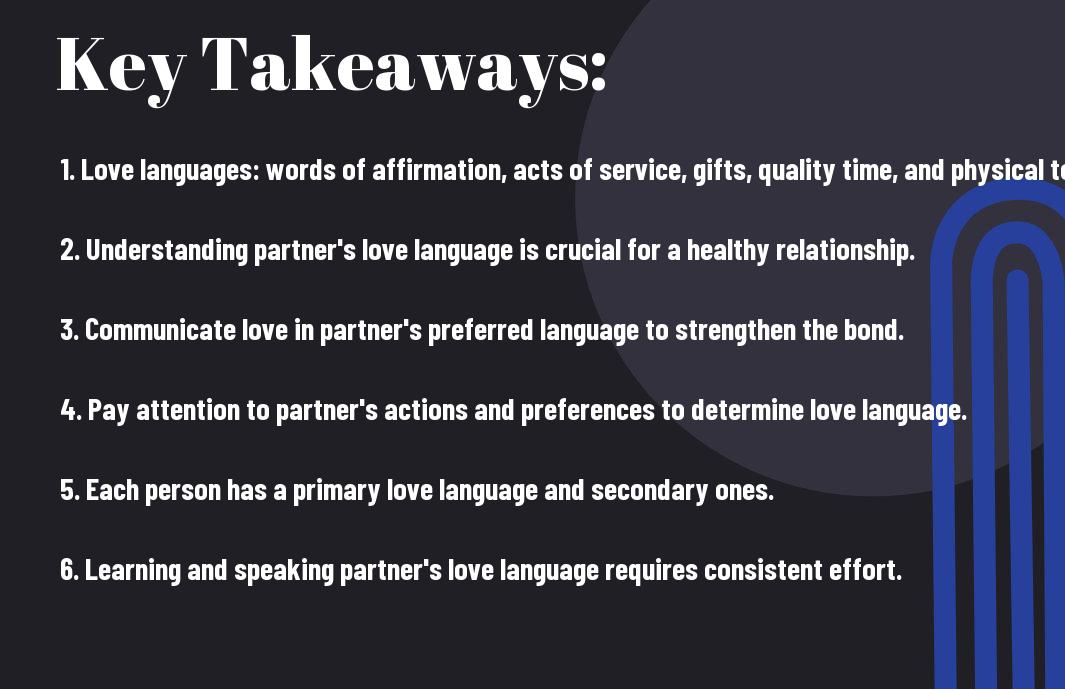
Key Takeaways:
- Understanding your partner's love language is crucial for a healthy relationship.
- Identifying your own love language can help you communicate your needs to your partner.
- It's important to express love in ways that your partner receives and understands.
- Actively seeking to speak your partner's love language can strengthen your bond.
- Respecting and acknowledging your partner's love language can improve your relationship.
- Compromise and adaptability are essential in meeting each other's love language needs.
- Never underestimate the power of showing love in a way that your partner understands.
Words of Affirmation: Whispering Sweet Nothings That Mean Everything
Obviously, words of affirmation are a powerful way to express love and build intimacy in a relationship. The simple act of verbalizing your affection and appreciation for your partner can have a profound impact on their emotional well-being. Whether it's a heartfelt “I love you” or a sincere “You mean the world to me”, your words have the ability to uplift and reassure your partner in a way that nothing else can.
Compliments vs. Criticism: The Power of Language
When it comes to words of affirmation, it's important to remember the impact of your language on your partner. Compliments have the power to boost your partner's self-esteem and make them feel valued and loved. On the other hand, criticism can be incredibly damaging to a relationship, eroding trust and creating distance between you and your partner. When expressing your love through words, be mindful of the impact of your language and strive to always uplift and encourage your partner.
Speaking Up: Effective Communication of Affection
Effective communication is key when it comes to expressing words of affirmation. Sometimes, it's not just about what you say, but how you say it. When you speak up to affirm your partner, be genuine and specific in your praise. Instead of generic statements, focus on the unique qualities and actions that you appreciate about your partner. This will make your words of affirmation more meaningful and impactful, strengthening your bond with your partner.
Quality Time: Undivided Attention in a Distracted World
Your partner's love language may be quality time, and in today's world of constant distractions, giving someone your undivided attention can be a true gift. Quality time doesn't necessarily mean hours of sitting together in silence; it's about being present and engaged in the moment.
Together but Apart: The Illusion of Presence
It's easy to fall into the trap of thinking you're spending quality time with your partner when you're both physically in the same space but mentally elsewhere. Maybe you're both on your phones or watching TV, but not truly engaged with each other. This illusion of presence can lead to feelings of disconnection and loneliness, even when you're together.
Crafting Moments: Activities and Presence That Count
When you make a conscious effort to spend quality time with your partner, it's not about the quantity of time spent, but the quality of the moments you share. Quality time can be as simple as going for a walk together, cooking a meal, or having a deep conversation. The key is to be fully present and engaged, making the most of the time you have together.
Receiving Gifts: Beyond Materialism to Thoughtful Tokens
Keep in mind that for some people, receiving gifts is their primary love language. It's not about materialism, but about feeling loved and appreciated. When you give your partner a gift, you are showing them that you have been thinking about them and that you know what makes them happy. It's a way of expressing your love in a tangible form, which can be incredibly meaningful to the recipient. So, when your partner expresses their love for receiving gifts, don't brush it off as being materialistic - instead, consider it as their way of feeling cherished.
The Symbolism of Gift-Giving
When you take the time to select a gift for your partner, it's not just about the physical item itself. The act of giving a gift symbolizes your thoughtfulness, care, and love for the person you are giving it to. The effort you put into choosing the right gift shows that you are attentive to your partner's likes and dislikes, which can make them feel truly valued and understood.
It's Not About the Price Tag: Value Over Cost
Remember, it's not about the cost of the gift that matters, but rather the value it holds for the recipient. A small, thoughtful gift that shows you know and understand your partner's tastes and preferences can mean far more than an expensive gift that lacks personal significance. When choosing a gift for your partner, focus on the sentiment behind it rather than the price tag, and you'll likely hit the mark every time.
Acts of Service: Love in the Trenches of Daily Life
Despite the grand gestures and sweet nothings, love often reveals itself in the small, everyday actions. For some people, this is the primary way they feel loved. If your partner's love language is Acts of Service, they appreciate it when you go out of your way to make their life easier. How important is it that your partner understands your love language? It's essential.
The Chore of Love: Reimagining Daily Tasks
When your partner's love language is Acts of Service, even the most mundane tasks can take on a new significance. Doing the dishes without being asked or picking up groceries on the way home from work can show your partner that you care in practical ways. It's not about the chore itself, but the fact that you took the initiative to do it without needing to be asked. Small acts of service can speak volumes about your love and consideration for your partner's needs.
When Actions Speak Louder Than "I Love You"
Actions truly speak louder than words when it comes to expressing love for someone whose primary love language is Acts of Service. Your partner values your deeds more than declarations of love. This means showing up and supporting them in practical ways, like helping them finish a task or being there during a difficult time. Your willingness to take action is what truly demonstrates your commitment and devotion.
Physical Touch: The Warmth of Affectionate Contact
Now, let's talk about the love language of physical touch. For some people, nothing says “I love you” quite like a warm embrace, a touch on the arm, or holding hands. If your partner's primary love language is physical touch, it's important to understand the power of affectionate contact in making them feel loved and valued. Whether it's a lingering hug, a quick shoulder squeeze, or a gentle touch on the cheek, physical touch can speak volumes when it comes to expressing love and creating a deeper connection with your partner.
Beyond the Bedroom: Non-Sexual Touch
When it comes to physical touch, it's not just about what happens behind closed doors. Non-sexual touch plays a crucial role in showing affection and love to your partner. From a comforting hug after a long day at work to holding hands while taking a walk, these small gestures can make a big impact on your partner who values physical touch as their love language. So, don't underestimate the power of a simple touch to show your love and affection.
Touch as Comfort: Building Safety and Connection
For someone whose love language is physical touch, the act of being physically close to their partner brings a sense of safety and connection. Your loving touch can serve as a source of comfort and reassurance, especially during difficult or stressful times. Whether it's cuddling on the couch or giving a reassuring pat on the back, the physical presence of your touch can provide a deep sense of security and emotional connection.

Nurturing Your Relationship's Love Language Garden
Not all love languages are the same, and knowing your partner's love language is just the first step. Once you've identified your partner's love language, it's important to nurture it like a delicate flower in a garden. Just as a garden needs constant care and attention, your relationship's love language garden requires the same level of commitment and effort.
Learning to Speak a Foreign Love Language
When you discover that your partner's love language is different from yours, it's like learning to speak a foreign language. It may not come naturally to you, but putting in the effort to learn and understand your partner's love language will strengthen your bond. It's about being open-minded and willing to step out of your comfort zone to make your partner feel loved and appreciated.
Bilingual Love: Managing Mismatched Languages
Managing mismatched love languages in a relationship is like navigating through a multilingual society. Just as a bilingual person can switch between languages, you can learn to adapt to your partner's love language while still expressing your own. It's about finding a balance and compromising to meet each other's needs.
Conclusion
Hence, understanding your partner's love language is crucial for a thriving relationship. By recognizing and actively engaging in your partner's primary love language, you will enhance the quality of your connection and foster a deeper emotional intimacy. Remember, just as you have your own unique love language, your partner has theirs. By learning to speak their language, you can show them the love and appreciation they truly desire. So, take the time to discover and understand your partner's needs, and watch love flourish in your relationship.
FAQ
Q: What are the five love languages?
A: The five love languages are words of affirmation, acts of service, receiving gifts, quality time, and physical touch. Each person has a primary love language that communicates love to them in a unique way.
Q: How do I know what my partner's love language is?
A: Pay attention to how your partner expresses love to others and what they complain about. Do they value quality time, or do they appreciate acts of service? Are they always giving gifts or seeking physical touch? Observing these patterns can reveal their primary love language.
Q: Can love languages change over time?
A: Absolutely! Life experiences, personal growth, and changes in relationships can all impact a person's love language. It's important to stay attuned to your partner's needs and be open to the possibility of their love language evolving.
Q: What if my love language is different from my partner's?
A: That's completely normal! Understanding each other's love languages can actually strengthen your relationship. It allows you to communicate love in a way that resonates with your partner, creating a deeper connection and mutual understanding.
Q: Can I have more than one primary love language?
A: While everyone has a primary love language, it's possible to appreciate and feel loved through multiple languages. However, identifying your primary love language can help you and your partner focus on the most effective ways to express love to each other.
Q: Is it important to speak my partner's love language even if it's not natural for me?
A: Absolutely! Love is about selflessness and sacrifice. While it may take effort to speak your partner's love language, the impact it can have on their happiness and the strength of your relationship is worth it.
Q: Can understanding love languages improve other relationships in my life?
A: Yes! The concept of love languages can be applied to all relationships, not just romantic ones. Understanding how others give and receive love can enhance your connections with friends, family, and coworkers.