
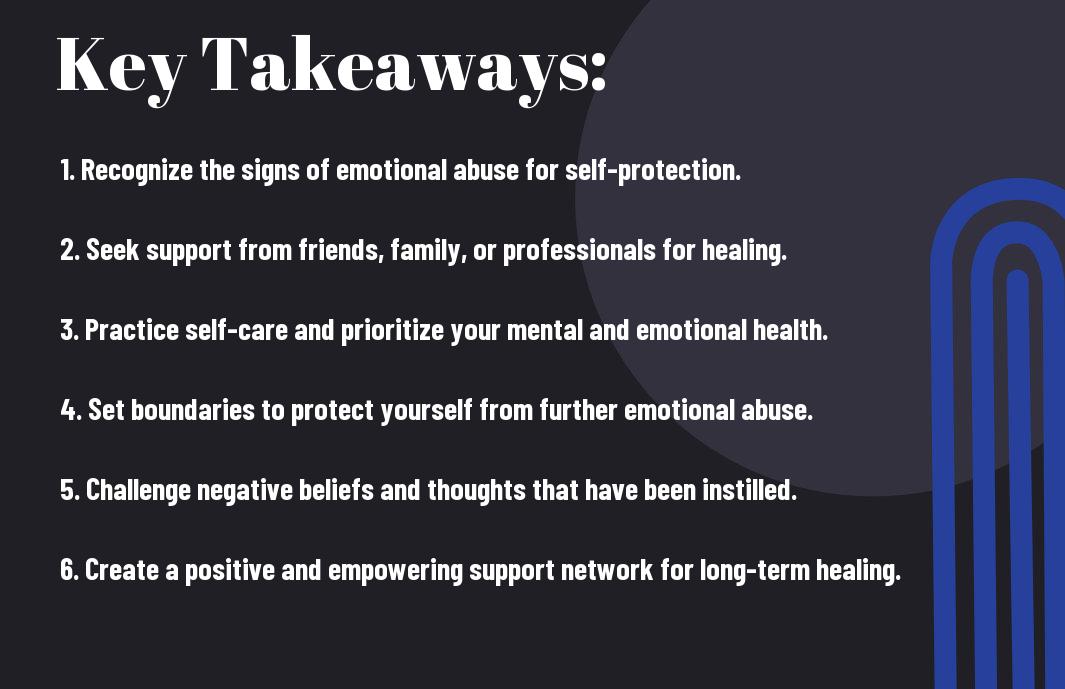
Key Takeaways:
- Recognize the signs: It's important to be able to identify emotional abuse in order to start the healing process. Pay attention to patterns of manipulation, control, and belittling behavior in your relationships.
- Seek professional help: Healing from emotional abuse can be a long and difficult journey. It's important to seek the support of a therapist or counselor who can provide guidance and tools for healing.
- Practice self-care: Engage in activities that bring you joy and relaxation, and prioritize your physical and emotional well-being. This can include exercise, meditation, or spending time with loved ones.
- Set boundaries: Learn how to set and enforce healthy boundaries in your relationships. This may require asserting yourself and saying no to toxic behavior.
- Work on self-esteem: Emotional abuse can significantly impact your self-worth. Focus on building your confidence and self-esteem through positive affirmations and surrounding yourself with supportive people.
- Forgive yourself: It's not your fault that you were a victim of emotional abuse. Practice self-compassion and forgiveness as you work through the healing process.
- Focus on the future: While it's important to process and heal from past emotional abuse, it's also crucial to focus on building a healthy and happy future for yourself. Surround yourself with positivity and work towards your personal goals.

The Mind Maze Escape
Any form of emotional abuse can leave deep scars on your mental and emotional wellbeing. It can feel as if you are trapped in a maze of negative emotions, self-doubt, and confusion. But there is a way out of this maze, and it starts with understanding and addressing the wounds that have been inflicted on your psyche.
The Power of Awareness: Recognizing the Wounds
When you have been emotionally abused, it's easy to internalize the blame and believe that you are somehow at fault for the mistreatment. However, it's important to recognize that the wounds you carry are not your fault. By becoming aware of the ways in which you have been affected by emotional abuse, you can start to unravel the tangled mess of emotions and begin to heal.
Mindfulness and Self-Compassion: Nurturing Your Inner Ally
One of the most powerful tools for rebuilding your mental and emotional wellbeing after emotional abuse is the practice of mindfulness and self-compassion. Mindfulness allows you to become aware of the present moment without judgment, helping you to observe your thoughts and feelings without becoming overwhelmed by them. Self-compassion, on the other hand, involves treating yourself with the same kindness and understanding that you would offer to a close friend. By nurturing your inner ally, you can gradually replace self-criticism and self-doubt with positive self-regard and self-care.
Emotional Exorcism
Not every emotional scar is visible, but the pain can be just as excruciating. When you've been emotionally abused, it can feel like there's a dark cloud following you everywhere you go. But just like in the movies, sometimes you need to perform an emotional exorcism to rid yourself of the negativity that's been haunting you. This involves confronting the pain, forgiving, and releasing resentment. If you want to dive deeper into this, you can check out Healing the Wounds of Emotional Abuse - Focus on the Family for more insights and support.
Cultivating Courage: Confronting the Pain
Confronting the pain of emotional abuse takes courage. It means facing the memories and emotions that you've been avoiding. But by acknowledging the pain and allowing yourself to feel it, you're taking the first step towards healing. It's not easy, but confronting the pain head-on can help you to start the process of letting go and moving forward.
Letting Go of the Ghosts: Forgiveness and Releasing Resentment
Forgiveness is not about excusing the behavior of the person who hurt you. It's about freeing yourself from the burden of carrying around resentment and anger. Letting go of the ghosts of the past allows you to create space for positive change in your life and move towards emotional freedom. It's a powerful act of self-love and healing.
Reconstructing the Self
After experiencing emotional abuse, it's common to feel like you've lost touch with yourself. Rebuilding your mental and emotional wellbeing means reconstructing your self-image and identity. It's a process of rediscovering who you are and creating a new, healthier version of yourself.
Blueprint of Boundaries: Setting Limits
When healing from emotional abuse, setting boundaries is crucial for protecting your mental and emotional wellbeing. You have the right to say no and set limits on how others treat you. Establish clear boundaries for what you will and will not tolerate in your relationships, and stick to them. This may feel uncomfortable at first, but it's essential for reclaiming your sense of self and regaining control over your life.
Building Blocks of Self-Esteem: Reclaiming Self-Worth
Emotional abuse often leaves you feeling unworthy and lacking in self-esteem. Reclaiming your self-worth is a fundamental part of healing. Start by acknowledging your strengths and accomplishments, no matter how small they may seem. Surround yourself with supportive and uplifting people who value you. Practice self-care and self-compassion, and challenge negative self-talk. Building your self-esteem is a journey, but it's a crucial step in rebuilding your mental and emotional wellbeing.
Nurturing Growth and Resilience
Unlike physical wounds, emotional abuse leaves behind invisible scars that can take a toll on your mental and emotional wellbeing. Healing from emotional abuse involves nurturing your growth and resilience. It's a process that requires both time and effort, but it's entirely possible to rebuild your sense of self and find healing. For more information on the stages of healing from emotional abuse, you can visit 7 Stages of Healing From Emotional Abuse.
Cultivating Positivity: A Garden of New Experiences
As you heal from emotional abuse, it's important to focus on cultivating positivity in your life. This involves seeking out new experiences that bring joy and fulfillment. Whether it's trying a new hobby, traveling to new places, or forming new connections with others, embracing fresh experiences can help shift your focus from past trauma to present blessings. By nurturing a garden of new experiences, you can create a fertile ground for positive emotions to flourish and overshadow the negativity of the past.
Resilience Recipes: Sustaining Recovery and Growth
Building resilience is essential for sustaining your recovery and growth after emotional abuse. Just as a healthy recipe requires the right ingredients, sustaining recovery and growth involves incorporating self-care, self-compassion, and healthy boundaries into your daily life. Taking proper care of yourself, having compassion for your own journey, and setting boundaries with toxic individuals can fortify your resilience and help you navigate the challenges that may arise as you continue on your healing journey.
FAQ
Q: What is emotional abuse?
A: Emotional abuse involves a pattern of behavior that aims to gain power and control over another person through the use of manipulation, intimidation, and belittling.
Q: How do I know if I am a victim of emotional abuse?
A: If you constantly feel anxious, depressed, or fearful around a particular person, and if you find yourself questioning your own worth and sanity, you might be experiencing emotional abuse.
Q: Can I heal from emotional abuse?
A: Absolutely! Healing from emotional abuse is possible with the right support, self-care, and the willingness to reclaim your power and self-worth.
Q: What are some steps I can take to heal from emotional abuse?
A: Seek therapy, establish healthy boundaries, practice self-care, and surround yourself with supportive and understanding people.
Q: Is it normal to feel guilty or ashamed for being a victim of emotional abuse?
A: It is common to feel that way, but it's important to remember that the abuse is not your fault. No one deserves to be mistreated.
Q: Can I rebuild my self-esteem after emotional abuse?
A: Absolutely! It takes time and effort, but with self-compassion, positive affirmations, and the help of therapy, you can rebuild your self-esteem and regain confidence.
Q: How do I prevent falling into another abusive relationship?
A: By recognizing the red flags, setting clear boundaries, and trusting your instincts, you can protect yourself from falling into another abusive relationship.