Excruciatingly painful, isn't it? When someone you love betrays your trust, it can feel like the whole world has come crashing down on you. But here's the thing, you have a choice. You can choose to hold onto the anger and bitterness, or you can choose to forgive and try to mend the trust that was broken. In this blog post, we'll delve into the complexities of forgiveness in love, and explore whether it's possible to rebuild trust after betrayal. It won't be easy, but it just might be worth it.
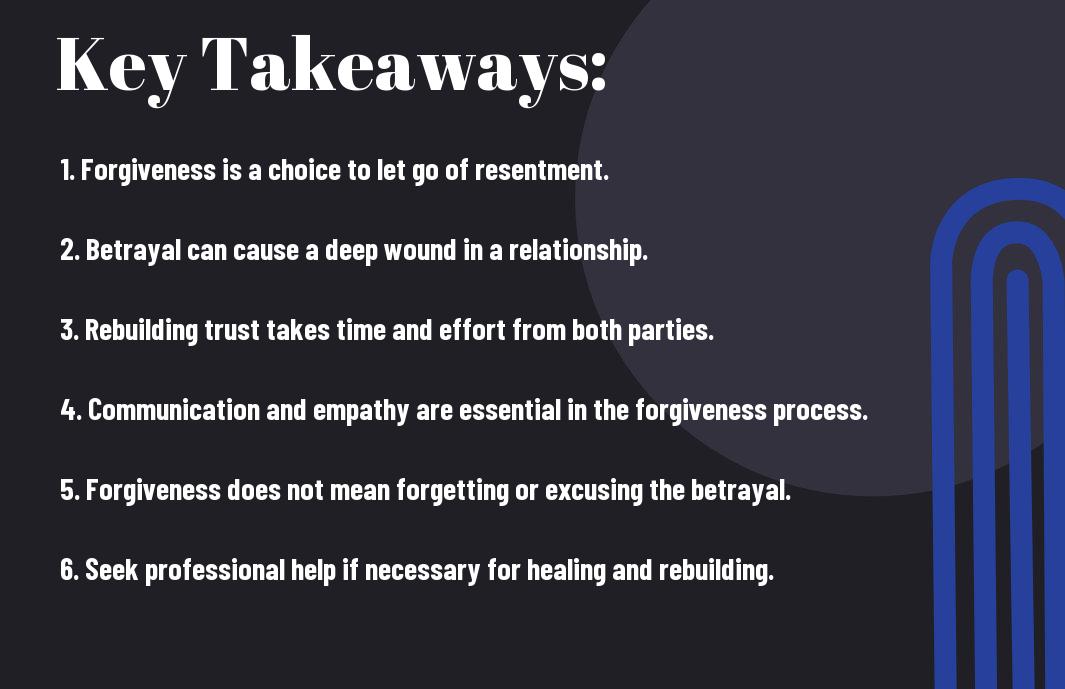
Key Takeaways:
- Forgiveness is a choice: When trust is broken, forgiveness is a conscious decision to move forward without holding onto the past hurt.
- Rebuilding trust takes time: After betrayal, rebuilding trust requires patience, transparency, and consistent effort from both parties.
- Communication is essential: Open and honest communication is crucial for addressing the root cause of betrayal and rebuilding trust.
- Self-forgiveness is important: It's essential to forgive yourself for any role you played in the betrayal and to work on healing and self-acceptance.
- Boundaries are necessary: Setting clear boundaries is important in rebuilding trust and protecting oneself from repeated betrayal.
- Seeking support can be beneficial: Seeking support from friends, family, or a therapist can provide valuable guidance and perspective during the forgiveness and trust-rebuilding process.
- Forgiveness doesn't always mean reconciliation: Forgiving someone doesn't necessarily mean you have to continue the relationship. Sometimes, forgiveness is about letting go and moving on for your own well-being.
The Bitterness Brew
While the idea of forgiveness may seem like a distant concept in the midst of betrayal, it is essential to first acknowledge and understand the bitterness that brews within you. It's normal to feel a range of emotions, from anger to resentment, as you grapple with the hurt and sense of betrayal that comes with being hurt by someone you love. This bitterness can seep into every aspect of your life, affecting your relationships, your work, and even your overall well-being. It's important to recognize and address these feelings before you can begin to heal and consider the possibility of forgiveness.
Savoring the Sting: The Allure of Anger
As you navigate the aftermath of betrayal, you may find yourself drawn to the allure of anger. It can feel empowering to hold onto your anger, as if it gives you a sense of control in a situation where you've felt utterly powerless. However, it's important to recognize the danger in holding onto this anger. While it may feel satisfying in the moment, it ultimately eats away at your own peace of mind and prevents you from moving forward. It's okay to feel angry, but it's crucial not to let it consume you.
From Grief to Grudge: The Evolution of Resentment
As time passes, the initial shock and grief of betrayal may evolve into a deep sense of resentment. You may find yourself continually replaying the events in your mind, harboring feelings of disappointment, hurt, and a desire for retribution. However, it's important to recognize that holding onto this resentment only serves to prolong your own suffering. It keeps you tethered to the pain of the past and prevents you from embracing the possibility of healing and moving forward.

The Alchemy of Forgiveness
After experiencing betrayal in a relationship, it can feel impossible to imagine forgiving the person who hurt you. However, forgiveness is not about letting the other person off the hook, but rather about freeing yourself from the burden of anger and resentment. It is a process that involves healing and self-discovery. If you're struggling with how to forgive someone after a major betrayal, you may find some valuable insights in this article How to forgive someone after a major betrayal.
Love's Labors Found: Understanding Forgiveness
Forgiveness is not a sign of weakness, but rather a sign of strength. It takes courage to let go of the pain and anger that betrayal has caused you. When you forgive, you are not saying that what happened was okay, but you are choosing to release the negative emotions that are holding you back. It's about reclaiming your power and refusing to let the betrayal define your future relationships.
Mending Fences, Not Building Walls: The Art of Reconciliation
Reconciliation is the next step after forgiveness, and it involves rebuilding trust and restoring the connection that was damaged. This process requires open communication, honesty, and a willingness to work through the pain together. It's not about ignoring the betrayal, but rather addressing it and moving forward with a renewed sense of understanding and empathy. It takes effort and commitment from both parties to create a stronger, healthier relationship.
The Trust Tightrope
To mend trust after betrayal, you must navigate the delicate tightrope of rebuilding your faith in someone who has hurt you deeply. It's a tricky journey that requires patience, understanding, and a willingness to take risks.
Balancing Acts: Restoring Reliance in Layers
When it comes to rebuilding trust, it's essential to recognize that it's not a one-time fix. It's a process of restoring reliance in layers. Each layer represents a different aspect of trust, and you must work through them methodically. It involves rebuilding trust in their words, actions, and intentions. It's like piecing together a puzzle – it takes time, but the end result is worth the effort.
Spotting the Cracks: Signs of Healing or Hollow Promises
As you navigate the journey of rebuilding trust, it's crucial to be aware of the signs that indicate genuine healing versus empty promises. Actions speak louder than words, so pay attention to whether their behavior aligns with their efforts to regain your trust. Look for consistent and sincere efforts to make amends and rebuild what was once broken. Beware of empty apologies and half-hearted attempts at reconciliation – they are just superficial bandaids on a deep wound.
Love's New Dawn
Unlike the dark clouds of betrayal that once shrouded your relationship, love's new dawn brings with it a glimmer of hope. Rebuilding trust after betrayal is a daunting task, but it's not impossible. It requires patience, commitment, and a willingness to put in the effort to mend what was broken. According to Hindustan Times, there are 6 ways to re-build trust in relationship after a betrayal that you can follow to help you move forward.
The Phoenix Rises: A Relationship Reborn
As you navigate the tumultuous waters of rebuilding trust, you may find that your relationship emerges stronger than ever. The pain of betrayal can give way to a newfound depth of understanding and connection. By acknowledging the hurt, working through it together, and committing to a fresh start, you and your partner can experience a relationship reborn. The experience can strengthen your bond and reignite the passion that may have waned in the aftermath of betrayal.
Perfectly Imperfect: Embracing Flaws Together
It's important to recognize that both you and your partner are imperfect beings. Embracing each other's flaws and vulnerabilities can deepen your empathy and compassion for one another. In the process of rebuilding trust, you may discover that it's the imperfections that make your love all the more beautiful and genuine. By facing challenges together, you can create a more authentic and resilient relationship.
Frequently Asked Questions - Forgiveness in Love
Q: Is it possible to mend trust after betrayal in a relationship?
A: Absolutely! Trust can be rebuilt with open communication, genuine remorse, and consistent effort from both parties.
Q: How do you forgive a partner who has betrayed your trust?
A: Forgiveness is a process that involves acknowledging your feelings, setting boundaries, and choosing to let go of resentment over time.
Q: Can forgiveness in love strengthen a relationship after betrayal?
A: Yes, when both partners are committed to growth and change, forgiveness can lead to a deeper bond and stronger connection.
Q: What are some signs that your partner is truly remorseful and seeking forgiveness?
A: Genuine remorse is shown through owning up to their actions, actively working to rebuild trust, and making a sincere effort to understand and support your healing process.
Q: How can I rebuild trust in my relationship after forgiveness?
A: Rebuilding trust takes time and consistent effort. Setting clear expectations, being transparent, and following through on promises are crucial steps in the process.
Q: Is it possible to love and trust again after a major betrayal?
A: Yes, with patience and a willingness to work through the pain, it is possible to love and trust again after a betrayal. It requires commitment, honesty, and a shared desire to move forward.
Q: What can I do if I struggle to forgive my partner for betraying my trust?
A: It's okay to seek professional help or counseling to navigate the process of forgiveness. Working through your feelings with a neutral third party can provide clarity and support.