
Intro: Laying It Down
To heal from emotional abuse in love, one must first lay down the foundation of understanding and self-awareness. This journey requires courage, strength, and the willingness to confront the painful truths. In this article, we will explore how Cognitive Behavioral Therapy (CBT) can be used as a powerful tool for healing from emotional abuse in love.
What's the Real: Understanding Emotional Abuse
Understanding emotional abuse is crucial for healing from its impact. It involves a pattern of behavior that seeks to gain power and control over another person. It can take many forms, including manipulation, gaslighting, and verbal attacks. Emotional abuse can leave lasting scars on a person's self-esteem and mental well-being. Recognizing the signs and effects of emotional abuse is the first step towards breaking free from its grip.
The Heart of the Hustle: CBT Basics
Cognitive Behavioral Therapy (CBT) is a powerful approach to healing that focuses on changing patterns of thinking and behavior. CBT empowers individuals to challenge negative thought patterns and develop healthier coping mechanisms. By addressing the core beliefs and thought processes that contribute to emotional distress, CBT can help individuals break free from the cycle of emotional abuse and reclaim their sense of self-worth.
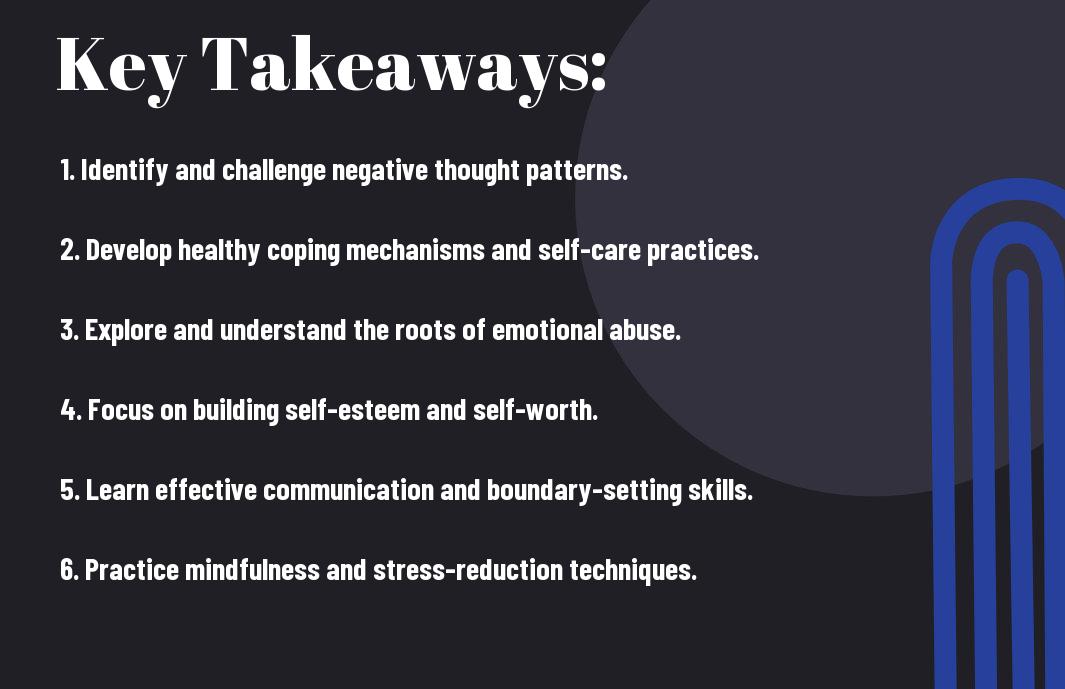
Key Takeaways:
- Recognize the signs: Educate yourself on the red flags of emotional abuse in a relationship.
- Empower yourself: Take back control of your life and build up your self-esteem.
- Challenge negative thoughts: Combat the destructive beliefs implanted by the abuser with positive thinking.
- Seek professional help: Consider therapy or counseling to work through the trauma and heal.
- Set boundaries: Establish clear limits with the abuser and prioritize your own well-being.
- Surround yourself with support: Lean on friends and family who uplift and encourage you through this process.
- Practice self-care: Engage in activities that bring you joy and promote self-love and healing.
The Healing Game
Any he or she who has been through emotional abuse in love knows that the journey to healing is no easy feat. It's like a game where the stakes are high, and the rules are constantly changing. But fortunately, there are tools out there to help you navigate this challenging terrain. One such tool is Cognitive Behavioral Therapy (CBT), which can play a crucial role in helping individuals recover from the trauma of emotional abuse.
Therapy can be an invaluable resource for survivors of emotional abuse. It can provide a safe space for he or she to explore their feelings, gain insight into their experiences, and learn healthy coping mechanisms. How Therapy Can Help After Abuse provides professional guidance and support to he or she who is on the path to healing.
Mindset Mixtape: CBT Techniques to Rewire Thoughts
When it comes to healing from emotional abuse, shifting one's mindset is crucial. CBT offers a variety of techniques to help he or she reframe their thoughts and challenge negative beliefs. By identifying and replacing destructive thought patterns with healthier ones, they can begin to break free from the mental shackles of their past trauma. This can include techniques like cognitive restructuring, behavioral activation, and mindfulness exercises, all designed to empower survivors and give them the tools to take control of their own healing process.
Love's Rehab: Building Self-Esteem on the Daily
One of the most damaging effects of emotional abuse is the erosion of self-esteem. Survivors often internalize the negative messages they received from their abuser, leading to feelings of worthlessness and self-doubt. CBT can help he or she rebuild their self-esteem by challenging these negative beliefs and replacing them with positive affirmations. By practicing self-care, setting boundaries, and engaging in activities that bring joy and fulfillment, he or she can slowly but surely reclaim their sense of self-worth and rebuild their confidence.
The Comeback
Now that they have completed their CBT for healing from emotional abuse in love, they are ready for the comeback. They have learned to identify and challenge negative thought patterns that were holding them back, and now they are empowered to take control of their life and relationships.
Dropping the Baggage: Setting Boundaries
After undergoing CBT, they have developed the confidence to drop the baggage from their past relationships. They are now able to set and enforce healthy boundaries, making it clear what they will and will not tolerate in a relationship. This newfound assertiveness allows them to protect themselves from further emotional abuse and manipulation.
Fresh New Tracks: Forming Healthy Relationships
With CBT, they have the tools to form fresh new tracks in their relationships. They are now able to recognize and gravitate towards healthy, supportive partners, while avoiding those who exhibit red flags for emotional abuse and manipulation. They are equipped to communicate effectively and build strong, fulfilling relationships based on mutual respect and understanding.

Keepin' It Real
Your journey to healing from emotional abuse in love is not a quick fix. It takes consistent effort and determinationto maintain progress and continue practicing self-care strategies. It's important to keep it real with yourself and acknowledge that healing is a journey, not a destination. In order to truly heal, one must be real with their emotionsand confront the underlying issues that have led to emotional abuse in the first place.
Staying Solid: Maintaining Progress
Once they have started on the path to healing, it's crucial for them to stay solid and remain committedto their progress. This includes attending therapy sessions regularly, practicing self-reflection, and seeking support from loved ones. Continued effort and perseverancewill help them maintain the progress they have made and prevent them from falling back into old patterns of behavior.
Self-Love Anthems: Ongoing Self-Care Strategies
In addition to maintaining progress, it's essential for them to incorporate ongoing self-care strategiesinto their daily routines. This can include activities such as meditation, journaling, and engaging in hobbies that bring them joy. Listening to music and engaging in activities that promote self-love and positivitycan also be beneficial in their healing journey.

Conclusion
Following this dope article, he now knows that Cognitive Behavioral Therapy (CBT) is a solid tool for healing from emotional abuse in love. He learned that CBT can help him recognize and challenge unhealthy thought patterns, manage his emotions, and rebuild his self-esteem. With the help of a qualified therapist, he can use CBT techniques to replace negative beliefs with positive ones, making it easier for him to break free from the cycle of abuse and move forward with his life. If he or someone he knows is dealing with emotional abuse, he should consider seeking out a therapist who specializes in CBT. For more information on how CBT can be used to stop abusive behaviors, check out Cognitive Behavioral Therapy Used To Stop Abusive ...