
Experiencing panic attacks can be incredibly frightening and overwhelming. If you find yourself dealing with this issue, it's important to know that help and relief are available. When you schedule a session with a therapist to discuss your panic attacks, it's vital to be prepared and open about your symptoms. You may feel anxious and unsure about how to approach this topic, but honesty and transparency are crucial for effectively addressing your concerns. Be prepared to openly discuss the frequency and severity of your panic attacks, as well as any potential triggers you have identified. Additionally, consider sharing information about your medical history and any past experiences with anxiety or mental health concerns. Remember, your therapist is there to support and assist you in finding strategies for managing and overcoming your panic attacks. If you need more information about panic disorder, take a look at Panic Disorder: When Fear Overwhelms - NIMH.
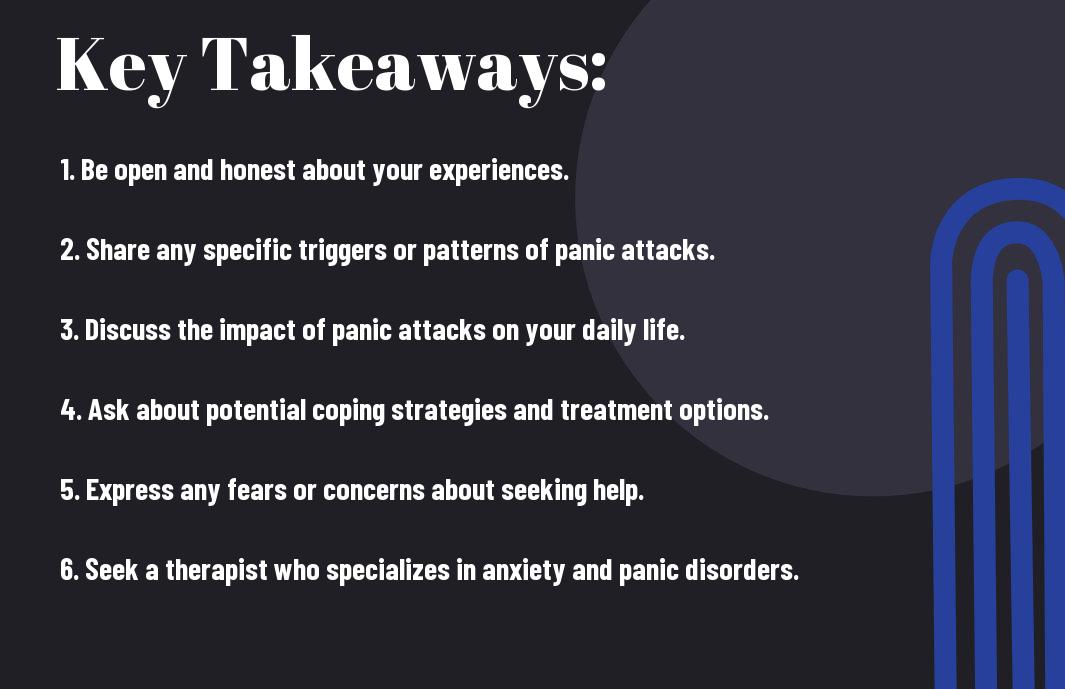
Key Takeaways:
- Be open and honest: It's important to be transparent with your therapist about your experiences and symptoms of panic attacks. This will help them understand your concerns and provide appropriate support.
- Discuss triggers and symptoms: Describe any specific triggers or symptoms you experience during panic attacks so your therapist can tailor their approach to your needs.
- Ask questions: Don't hesitate to ask your therapist any questions you may have about panic attacks or the therapeutic process. Understanding your condition is crucial to overcoming it.
- Stay engaged during sessions: Actively participate in therapy sessions and provide feedback to your therapist. This will help them gauge your progress and adjust their approach as needed.
- Express your goals for therapy: Communicate what you hope to achieve through therapy and how you want to manage your panic attacks. Your therapist can work with you to develop a personalized treatment plan.
- Adhere to recommended treatments: Follow through with any recommended treatments or exercises your therapist suggests. Consistency is key to seeing progress in managing panic attacks.
- Seek support outside of therapy: Consider joining a support group or confiding in trusted friends and family members for additional support outside of therapy sessions.
Preparing to Talk to Your Therapist
The first step in addressing your panic attacks with your therapist is to prepare for your conversation. This involves a few key components that will help you communicate your symptoms and experiences effectively.
Recognizing Your Symptoms
Before speaking with your therapist, it's important to take some time to recognize and document your panic attack symptoms. This includes physical sensations such as heart palpitations, shortness of breath, and dizziness, as well as emotional symptoms like fear, helplessness, or impending doom. Being able to clearly articulate these symptoms will help your therapist understand the severity and impact of your panic attacks.
Keeping a Panic Attack Journal
Keeping a panic attack journal can provide valuable insight for both you and your therapist. By documenting the frequency, triggers, and severity of your panic attacks, you can identify patterns and potential triggers. Additionally, tracking your emotional and physical state before, during, and after a panic attack can help your therapist better understand the progression of your symptoms and the impact they have on your daily life. Consider including details such as the time of day, location, and any specific triggers you may have noticed.
Communicating Effectively During Therapy
Lastly, when it comes to talking to your therapist about panic attacks, it is important to communicate effectively during your therapy sessions. Effective communication will ensure that you are able to convey your experiences and emotions accurately, allowing your therapist to provide you with the best possible help and support. It can be difficult to open up about panic attacks, but with the right approach, you can make the most out of your therapy sessions.
Describing Your Experience
When describing your experience with panic attacks to your therapist, it is important to be as detailed and honest as possible. This includes not only the physical symptoms of panic attacks, but also the thoughts and emotions that accompany them. Describe the situations that trigger your panic attacks, and how they make you feel. By providing this information, Therapy for Panic and Panic Attacks can be tailored to your specific needs and experiences.
Establishing Trust and Building Rapport
Building a solid foundation of trust with your therapist is essential for effective therapy. It may take time for you to feel comfortable enough to open up completely, but trust is the cornerstone of all successful therapy. Remember that your therapist is there to help you, and establishing a strong rapport will ensure that you feel supported and understood. Be open to the process and allow yourself to trust in your therapist's expertise. Remember that your therapist is bound by confidentiality, so you can feel safe in sharing the most personal details of your experience.

Collaborative Treatment Planning
Despite the expertise and training of your therapist, the most effective approach to managing your panic attacks is a collaborative one. This means that you and your therapist will work together to develop a treatment plan that takes into account your unique experiences, symptoms, and preferences.
Exploring Therapy Options
When discussing your panic attacks with your therapist, it's important to explore the different therapy options available. Your therapist should provide you with information about various evidence-based treatments for panic attacks, such as cognitive-behavioral therapy (CBT), exposure therapy, and relaxation techniques. They should also consider your individual needs and preferences when recommending a therapy approach.
Setting Goals and Expectations
Setting specific and measurable goals for your treatment can help you and your therapist track your progress and make adjustments as needed. During the collaborative treatment planning process, you and your therapist should discuss what you hope to achieve through therapy, as well as any concerns or fears you may have. It's important to establish realistic expectations for the course of treatment and the potential outcomes.

Coping Strategies and Techniques
To effectively manage your panic attacks, it's essential to learn coping strategies and techniques that can help you regain a sense of control and calm during an episode. One helpful approach is to educate yourself about how to help someone having a panic attack. Understanding how to support a loved one in such a situation can also provide you with valuable insights and techniques to manage your own panic attacks. You can find a comprehensive guide on How To Help Someone Having a Panic Attack: 19 Tips that offers practical advice and techniques to assist both yourself and others during a panic attack.
Learning Relaxation and Breathing Exercises
Learning relaxation and breathing exercises can be immensely beneficial in managing your panic attacks. These techniques can help calm your mind and body during a panic attack, reducing the intensity and duration of the episode. Deep breathing, progressive muscle relaxation, and mindfulness meditation are some effective methods you can explore. By incorporating these techniques into your daily routine, you can build resilience and equip yourself with the tools to cope with panic attacks when they occur.
Implementing Behavioral Changes
Implementing behavioral changes can also play a crucial role in managing your panic attacks. By identifying triggers and patterns associated with your panic attacks, you can make informed adjustments to your routine and lifestyle. This may involve avoiding certain stressors, establishing a consistent sleep schedule, incorporating regular physical activity, and practicing healthy coping mechanisms. Making these positive changes can significantly reduce the frequency and severity of your panic attacks, empowering you to take control of your mental well-being.
FAQ
Q: How should I approach a therapist about my panic attacks?
A: When speaking with a therapist about panic attacks, it's important to be open and honest about your experiences. Clearly communicate your symptoms, triggers, and any past history of anxiety or panic attacks.
Q: What type of therapist should I seek for help with panic attacks?
A: Look for a therapist who specializes in treating anxiety and panic disorders, such as a licensed clinical psychologist, psychiatrist, or licensed professional counselor. They should have experience and training in treating panic attacks.
Q: What questions should I ask a potential therapist about treating panic attacks?
A: Inquire about their experience in working with individuals who have panic attacks and their approach to treatment. Ask about the types of therapy they use, such as cognitive-behavioral therapy (CBT) or exposure therapy, and how they tailor treatment to each individual.
Q: How can I prepare for my first therapy session for panic attacks?
A: Reflect on your experiences with panic attacks, including when they occur, what triggers them, and how they impact your daily life. Consider any coping strategies you've used in the past and what has been helpful or unhelpful.
Q: What can I expect during therapy for panic attacks?
A: Therapy may involve exploring the underlying causes of your panic attacks, developing coping skills, and challenging irrational thoughts and fears. Your therapist may also teach relaxation techniques and ways to manage stress.
Q: How long does therapy for panic attacks typically last?
A: The duration of therapy for panic attacks varies depending on the individual's needs and progress. Some individuals may see improvement in a few months, while others may benefit from longer-term therapy. Consistent attendance and active participation in therapy can influence the timeline of treatment.
Q: What should I do if I feel uncomfortable or unsafe during therapy for panic attacks?
A: It's important to communicate openly with your therapist if you feel uncomfortable or unsafe. If necessary, seek support from a trusted friend or family member and consider finding a new therapist who better meets your needs.