
Have you ever experienced a sudden rush of fear or overwhelming sense of dread? It can be difficult to determine whether you are having an anxiety attack or a panic attack. Understanding the difference between the two can be crucial in seeking the right treatment and managing your symptoms effectively. While both may share similar symptoms, such as racing heartbeat, shortness of breath, and feelings of impending doom, there are key distinctions that can help you identify which type of attack you are experiencing. In this blog, we will examine the symptoms, causes, and treatment options for anxiety attacks and panic attacks, so you can better understand how to manage your mental health.
Key Takeaways:
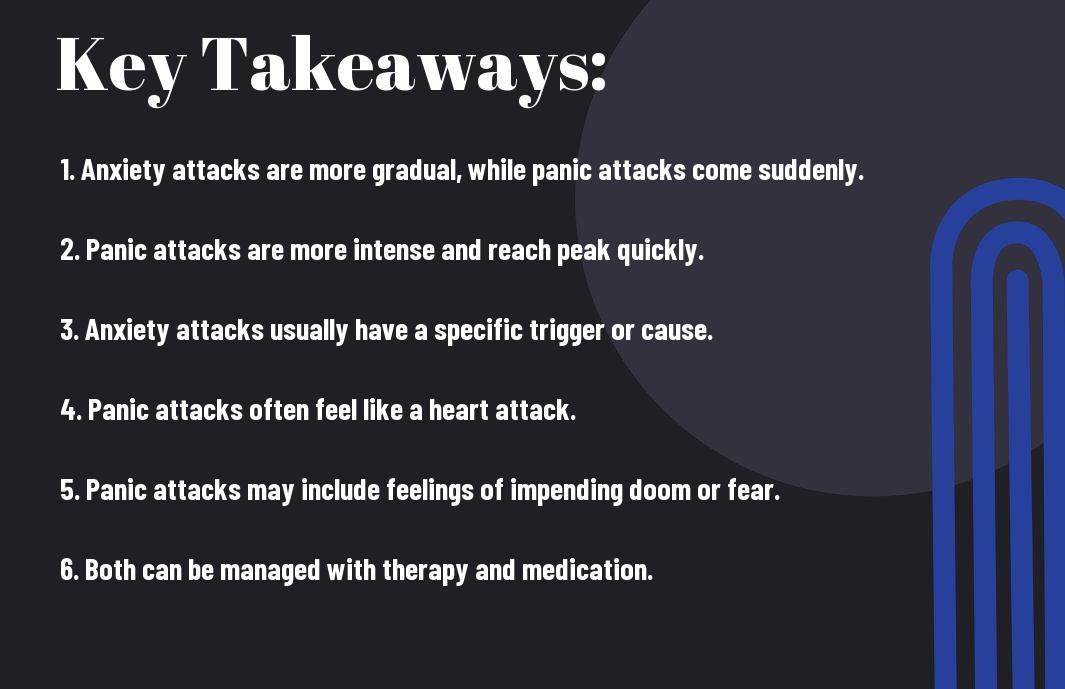
- Anxiety attacks are typically triggered by a specific stressor and involve intense fear or worry, while panic attacks arise suddenly and often without any obvious trigger.
- During an anxiety attack, the symptoms may be related to the specific stressor, such as work, family, or personal issues, while panic attacks involve physical symptoms like a racing heart, difficulty breathing, and dizziness.
- Physical symptoms are more predominant in panic attacks, while psychological symptoms are more common in anxiety attacks.
- Anxiety attacks are typically less intense and shorter in duration compared to panic attacks, which can peak within minutes and last for hours or even days.
- People experiencing an anxiety attack often remain aware of their surroundings and the cause of their distress, while during a panic attack, individuals may feel detached from reality or experience a sense of impending doom.
- Treatment approaches for anxiety attacks and panic attacks can vary, with therapies such as cognitive behavioral therapy and medication used to manage symptoms and prevent future occurrences.
- It is important to seek professional help if you are experiencing symptoms of either anxiety attacks or panic attacks, as they can significantly impact daily functioning and overall quality of life.
Understanding Anxiety Attacks
Clearly, it is important to distinguish between anxiety attacks and panic attacks. While both can be overwhelming and distressing, anxiety attacks are often triggered by specific stressors or situations. These situations can vary from person to person and can include things like public speaking, financial worries, or relationship conflicts. You may find more information about the Difference Between Panic Attack and Anxiety Attack
Symptoms of Anxiety Attacks
During an anxiety attack, you may experience a range of symptoms, including a racing or pounding heart, sweating, trembling or shaking, shortness of breath, feelings of impending doom, or a sense of being out of control. These symptoms can be extremely distressing, but it's important to remember that they are not harmful and will pass. It's crucial to recognize these symptoms as a signal that you need to take action to manage your anxiety.
Triggers and Duration
Anxiety attacks can be triggered by a specific situation or perceived threat. They usually last for a shorter period of time than panic attacks, often subsiding once the triggering event has passed. Identifying your triggers can help you take steps to manage and prevent anxiety attacks.
Management Strategies
There are several strategies that can help you manage your anxiety attacks, including deep breathing exercises, practicing mindfulness and meditation, and seeking support from a mental health professional. Developing a personalized plan for managing your anxiety can help you feel more in control and reduce the frequency and intensity of your attacks.
Exploring Panic Attacks
Lastly, let's explore panic attacks in more detail. Panic attacks can be an overwhelming experience, characterized by intense fear and physical symptoms that can be quite distressing. Unlike anxiety attacks, panic attacks often come on suddenly and reach peak intensity within minutes.Symptoms of Panic Attacks
Panic attacks can manifest with a variety of symptoms, including rapid heart rate, chest pain, shortness of breath, trembling or shaking, dizziness, and a feeling of impending doom. You may also experience hot flashes, chills, nausea, or a sense of tingling or numbness in your extremities. These symptoms can be incredibly frightening and lead to a fear of losing control or even dying.Triggers and Duration
Panic attacks can occur without warning, but they can also be triggered by specific situations or stimuli, such as crowd, enclosed spaces, or certain phobias. The duration of a panic attack can vary, but they typically peak within 10 minutes and can last anywhere from several minutes to half an hour. It's important to note that while the physical symptoms of a panic attack may subside, the emotional impact can linger for hours.Management Strategies
Managing panic attacks involves a combination of coping strategies and professional treatment. Deep breathing exercises, mindfulness techniques, and progressive muscle relaxation can be helpful in the moment to reduce the intensity of a panic attack. Seeking therapy, such as cognitive-behavioral therapy, can also be beneficial in addressing the underlying causes of panic attacks and learning effective coping mechanisms. It's also important to identify and avoid potential triggers, as well as practicing self-care and stress management techniques to reduce the likelihood of future episodes. Seeking professional help is crucial if you frequently experience panic attacks, as they can significantly impact your daily life and overall well-being.Key Differences Between Anxiety and Panic Attacks
Your understanding of the key differences between anxiety and panic attacks is crucial in managing your symptoms and seeking appropriate treatment. While these two conditions share similar symptoms, the underlying causes and responses to these episodes may differ significantly.
Clinical Distinctions
When it comes to clinical distinctions, one key difference between anxiety and panic attacks lies in their intensity and duration. Anxiety attacks typically manifest as prolonged periods of worry or fear, often accompanied by physical symptoms such as muscle tension and restlessness. On the other hand, panic attacks are characterized by sudden and intense feelings of fear or discomfort, often reaching a peak within minutes. Additionally, panic attacks may be accompanied by physical sensations such as shortness of breath, chest pain, or dizziness, which are less common in anxiety attacks.
Response and Treatment Approaches
Understanding the differences in response and treatment approaches is essential for effectively managing anxiety and panic attacks. While both conditions can be debilitating, seeking appropriate treatment tailored to your specific symptoms is crucial. For anxiety attacks, cognitive-behavioral therapy and stress management techniques may be helpful in managing persistent feelings of unease and worry. In contrast, panic attacks may require a more immediate response, often involving techniques such as deep breathing exercises and grounding techniques to help alleviate the intensity of the episode. It's important to consult with a healthcare professional to develop a personalized treatment plan that addresses your specific symptoms and needs.
Navigating Treatment and Support
Despite the similarities, it's important to understand the differences between panic attacks and anxiety attacks when seeking treatment and support. Understanding the specific symptoms and triggers of each can help you and your healthcare provider develop an appropriate treatment plan. For more information, you can also read this article on Panic Attack vs. Anxiety Attack: What's the Difference?
Professional Help and Diagnosis
If you're experiencing severe anxiety or panic attacks, it's crucial to seek professional help for an accurate diagnosis. A mental health professional can help determine the underlying cause of your symptoms and create a personalized treatment plan. They may recommend therapy, medication, or a combination of both to help you manage your symptoms and improve your overall well-being. Remember, ignoring severe anxiety or panic attacks can have serious consequences for your mental and physical health.
Self-Help Strategies and Lifestyle Changes
While professional help is crucial, there are also self-help strategies and lifestyle changes that can support your overall treatment plan. These may include stress management techniques, regular exercise, and a healthy diet. Engaging in relaxation exercises such as breathing techniques, mindfulness, or yoga can also help alleviate symptoms of anxiety and panic attacks. Additionally, making positive lifestyle changes such as reducing caffeine and alcohol intake, improving sleep quality, and setting boundaries to manage stress can have a significant impact on your overall well-being.
Conclusion
Upon reflecting on the differences between anxiety attacks and panic attacks, it is important to remember that while the symptoms of these two conditions may be similar, the underlying causes and triggers can be vastly different. Your understanding of these differences can help you better manage and cope with the symptoms you may experience. By recognizing the specific characteristics of each type of attack, you can seek the appropriate treatment and support to address your individual needs. Remember, seeking professional help and gaining a better understanding of your own experiences is the first step towards managing and overcoming anxiety and panic attacks.
FAQ
Q: What is the difference between anxiety attacks and panic attacks?
A: Anxiety attacks are typically less severe than panic attacks and are often triggered by a specific stressor or situation. Panic attacks, on the other hand, come on suddenly and are characterized by intense feelings of fear and physical symptoms such as a racing heart and shortness of breath.
Q: What are the symptoms of an anxiety attack?
A: Symptoms of an anxiety attack may include feelings of worry or dread, restlessness, muscle tension, irritability, and difficulty concentrating.
Q: What are the symptoms of a panic attack?
A: Symptoms of a panic attack may include a racing or pounding heart, sweating, trembling or shaking, shortness of breath, feelings of choking, and chest pain.
Q: What are the potential triggers for anxiety attacks?
A: Potential triggers for anxiety attacks may include stress, environmental factors, trauma, or specific phobias.
Q: What are the potential triggers for panic attacks?
A: Potential triggers for panic attacks may include a sudden feeling of fear, a major life stressor, or a traumatic event.
Q: How are anxiety attacks and panic attacks treated?
A: Treatment for anxiety attacks and panic attacks may include therapy, such as cognitive behavioral therapy, medications, and lifestyle changes such as stress management and relaxation techniques.
Q: When should I seek medical help for anxiety or panic attacks?
A: If you experience frequent or severe anxiety or panic attacks that interfere with your daily life, it is important to seek medical help to receive a proper diagnosis and treatment plan.