
Have you ever pondered the importance of financial transparency in relationships? The topic of money, while often considered taboo, can be a make or break factor for couples. Open communication about money is not only healthy for your relationship, but it also builds trust and understanding. In this blog post, we'll delve into the dangerous consequences of avoiding financial conversations with your partner and explore the positive aspects of fostering financial transparency and trust in your relationship. For more in-depth insights, you can also check out this post Talking About Finances: A Touchy Topic Made Easier for ...
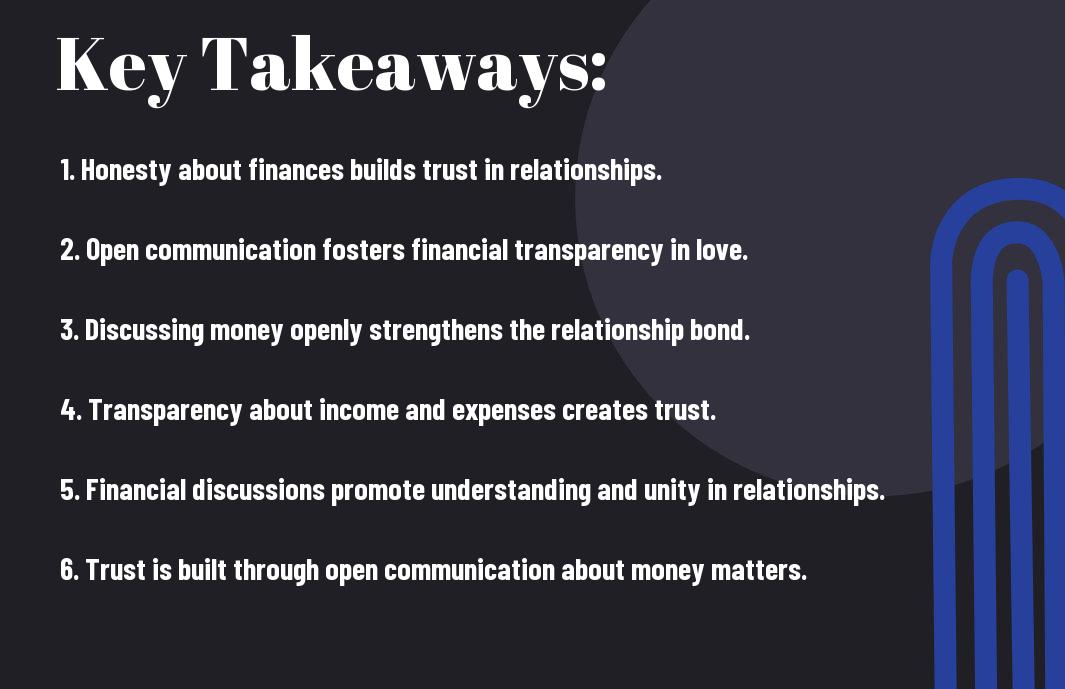
Key Takeaways:
- Open communication breeds trust: Talking about money with your partner can lead to a stronger sense of transparency and trust in the relationship.
- Discussing money reduces stress: Being open about financial concerns can help alleviate the stress that comes with managing money as a couple.
- Transparency creates a solid financial foundation: Sharing financial goals and concerns can help create a solid foundation for a couple's financial future.
- Joint financial planning is essential: Working together on financial decisions can help both partners feel involved and accountable.
- Money talks shouldn't be taboo: Instead of avoiding the topic, couples should strive to have open and ongoing conversations about money to maintain transparency and trust.
- Financial transparency leads to better decision-making: Knowing each other's financial situation can lead to better decisions about saving, spending, and investing as a couple.
- Transparency fosters teamwork: Being open about money fosters a sense of teamwork in managing finances, which can strengthen the bond between partners.
Heart and Wallet: Uniting Love and Finances
The key to any successful relationship is open communication, and this holds true when it comes to money matters as well. Your financial situation and how you manage it can have a significant impact on your relationship. Understanding each other's financial goals, attitudes towards money, and spending habits can help build a strong foundation for your future together. It's essential to open up about your finances and work together to create a plan that aligns with both of your goals and values.
Romance and Revenue: Why They Can't Live Apart
Money can be a sensitive topic in any relationship, but it's crucial to address it head-on. Financial transparency is key to building trust and fostering a healthy partnership. Sharing your financial details, including income, debt, and savings, can help you both understand each other's financial situation and work towards a shared future. It's important to have open conversations about budgeting, saving, and spending, as well as any financial goals you may have as a couple.
The Trust Fund: Investing in Emotional and Financial Growth
When you combine your lives, it's essential to consider how your financial decisions can impact both of you. Building trust in your relationship means being transparent about your financial habits and upholding your commitments. Financial infidelity can be just as harmful as emotional infidelity, so it's important to be honest about your spending and financial obligations. By working together to create a financial plan and holding each other accountable, you can invest in both your emotional and financial growth as a couple.
Confessions of a Joint Account: The Dos and Don'ts
Now that you and your partner have decided to combine your finances, it's important to set some ground rules for your joint account. Transparency and trust are essential for making this arrangement work, but there are also some practical dos and don'ts to consider.
Shared Dreams or Fiscal Nightmares?
When it comes to shared finances, one common mistake is not discussing your individual financial goals. It's important to have open and honest conversations about your dreams and aspirations, as well as your fears and concerns. This will help you align your financial priorities and work towards a common goal. Ignoring each other's financial dreams can lead to resentment and frustration, so make sure to have those discussions early on in your joint financial journey.
Navigating the Choppy Waters of Joint Finances
One of the biggest challenges of having a joint account is dealing with unexpected expenses. Whether it's a medical emergency, a home repair, or a car breakdown, these situations can put a strain on your finances and your relationship. It's important to have a clear plan for how you will handle these unexpected financial challenges. Having an emergency fund and regularly reviewing your budget can help you navigate these choppy waters without letting them rock the boat of your relationship.
The Solo Ventures: Maintaining Autonomy Within Unity
After tying the knot, it's essential to maintain your autonomy while embracing the unity of marriage. This also applies to your finances. It's crucial to maintain a sense of independence when it comes to your money, even when combining aspects of your financial life with your partner.
Independence Isn't a Dirty Word: Individual Financial Spaces
When it comes to finances, it's important to have your own individual financial space. This doesn't mean keeping secrets or hiding money from your partner. It simply means having some financial independence within the relationship. This can involve maintaining your own bank account, having a separate savings or investment account, or keeping some financial assets in your name only. Having individual financial spaces can provide a sense of security and independence that is crucial for your own financial well-being.
Money Talks: The Importance of Personal Financial Goals
Setting personal financial goals is essential for maintaining autonomy within unity. It's important for you and your partner to have open communication about your individual financial goals and aspirations. This can involve discussing your career goals, savings targets, investment objectives, and personal spending habits. By sharing your personal financial goals with your partner, you can work together to support each other in achieving those goals while also respecting each other's autonomy.

Communication Currency: Dialogue as an Investment
For a relationship to thrive, it's crucial to establish open communication about money. Just like any other aspect of a partnership, discussing finances requires trust, empathy, and understanding. When you view dialogue about money as a form of investment, you not only improve your financial situation but also strengthen the bond with your partner.
Beyond the Numbers: Addressing Financial Fears and Desires
When it comes to discussing finances in a relationship, it's essential to acknowledge that money is more than just a number. It represents your fears, hopes, and desires. By opening up about your financial challenges and dreams, you let your partner in on a deeper level. It's an opportunity to offer support, celebrate victories, and work towards shared goals. This kind of vulnerability can strengthen your connection and create a sense of shared purpose.
The Transparency Tactic: Tools for Sustainable Money Conversations
When it comes to discussing money, transparency is key. One of the most powerful tools for sustainable money conversations is regular check-ins. Set aside time to openly discuss your financial situation, concerns, and potential changes. This not only keeps you on the same page but also allows for preemptive problem-solving. Additionally, consider using financial tracking tools to visualize your progress and identify areas for improvement. By using these tools, you can build a more solid financial foundation and deepen your trust in each other.
Financial Transparency and Trust - Open Communication about Money in Love
Q: Why is financial transparency important in a relationship?
A: Because money matters! Being open and honest about finances can build trust and prevent misunderstandings down the road. Plus, it shows your partner that you value transparency and open communication.
Q: How do I start a conversation about money with my partner?
A: Approach the discussion with curiosity and a willingness to listen. You can start by sharing your own approach to money and asking about theirs. Remember, it's a team effort!
Q: What if my partner doesn't want to talk about money?
A: Be patient and understanding. Money can be a sensitive topic for many people. Try to find a time when both of you are relaxed and not feeling pressured, and assure your partner that this conversation is important for the health of your relationship.
Q: Should we have a joint bank account?
A: It depends on what works best for you as a couple. Some partners find joint accounts to be a great way to share financial responsibilities, while others prefer to keep their finances separate. The key is to find a solution that reflects both of your values and comfort levels.
Q: How can we avoid financial conflicts in our relationship?
A: Set clear expectations and boundaries, and regularly check in with each other about your financial goals and habits. Having open, ongoing conversations about money can help prevent conflicts from arising in the first place.
Q: What if my partner has a lot of debt?
A: Be supportive and non-judgmental. Offer to work together on a plan to manage and reduce the debt. Remember, tackling financial challenges as a team can actually bring you closer together.
Q: Is it okay to keep some financial secrets from my partner?
A: Trust is the foundation of a healthy relationship, and that includes trust in financial matters. Keeping secrets about money can erode that trust over time. It's always best to be open and honest with your partner about your finances, even if it's difficult.